



Thermal Efficiency
Application & material guidance
Thermal Efficiency
Reduce unwanted heat transfer through sound insulation design. Alumina fiber materials can support this work, but energy savings must be measured in the installed system.
Low heat storage and thermal resistance
Lightweight fiber insulation combines low mass with thermal resistance. It may reduce the energy tied up in heating a lining during cyclic operation. The result depends on the existing lining, duty cycle, exposed area and heat-transfer paths.
A practical comparison
- Record baseline energy use and process throughput.
- Compare conductivity at relevant temperatures and installed densities.
- Include joints, supports, thermal bridges and air leakage.
- Measure stabilized performance and repeat after a representative service period.
Report outcomes with context
Use measured energy consumption, output and operating hours to compare alternatives. Morlion’s supplied documents do not establish a product carbon footprint or a universal percentage energy saving, so such claims should be calculated for the project.
Focus on high-temperature process equipment
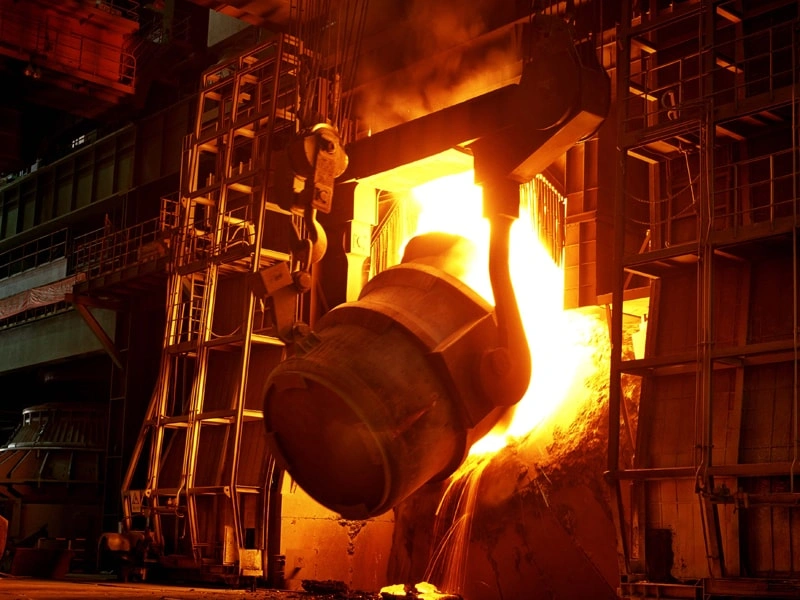
Iron and steel processing is an application area identified by Rongrong for alumina fiber blankets, fabrics and modules. Such equipment offers a practical starting point for an insulation review: document the current lining and operating cycle, then compare heat losses and energy use for the proposed design under equivalent production conditions.
Related partner application information
Start a conversation
Discuss your application
Tell us your operating conditions, component dimensions and qualification requirements so we can review an appropriate material and supply format.