



Ceramic Additive Manufacturing
Application & material guidance
Ceramic Additive Manufacturing
Continuous ceramic fiber printing introduces reinforcement placement into oxide composite manufacturing. Feedstock, deposition and ceramic conversion must be developed as a connected process.
Feedstock and machine compatibility
The A857-D8 and A857-D11 families are described in the Chinese brochure with several feedstock dimensions. Before selecting a grade, review the machine’s feeding and deposition method, fiber bending limits and the required part architecture.
From deposited material to ceramic component
The final properties depend on reinforcement alignment, matrix distribution, porosity and heat treatment. High feedstock tensile values do not imply equivalent strength in every direction of a printed component.
A staged qualification route
- Establish repeatable feeding and deposition with a small trial.
- Characterize drying and ceramic conversion.
- Measure representative coupons for the relevant orientations.
- Validate the component under its intended thermal and mechanical load.
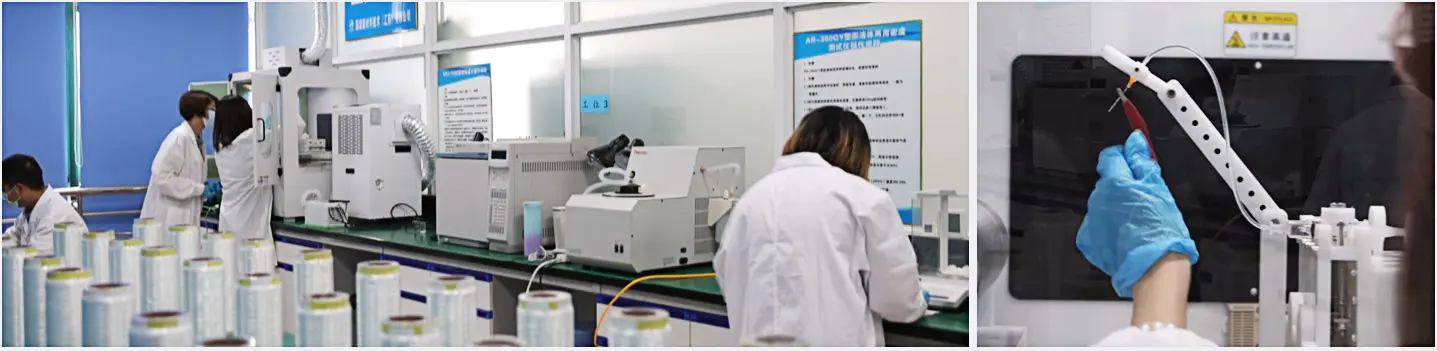
Slurry-based printing routes
The 2026 brochure also identifies ceramic slurries for binder jetting and digital light processing (DLP) development. These routes use different feedstock and machine requirements from continuous-fiber deposition. A slurry must be formulated and qualified for the chosen process; the supplied material is not automatically a ready-to-print photopolymer formulation.
Application development
The brochure illustrates electronic housings and heat-management components, battery ceramic substrates, catalyst carriers and high-temperature mechanical parts. It also proposes medical and aerospace applications. Those are development directions, with application-specific qualification required before use.
Start a conversation
Discuss your application
Tell us your operating conditions, component dimensions and qualification requirements so we can review an appropriate material and supply format.